

You are in your 40s. Things that were never a concern before are now happening on your face. A coarse dark hair on the chin. Something on the jawline. You pluck it. Another appears. You wonder what is going on.
The standard explanation is “hormonal changes” or “menopause.” Both are partially right. But the mechanism that most directly explains why facial hair appears or worsens in your 40s is often something more specific — and more addressable.
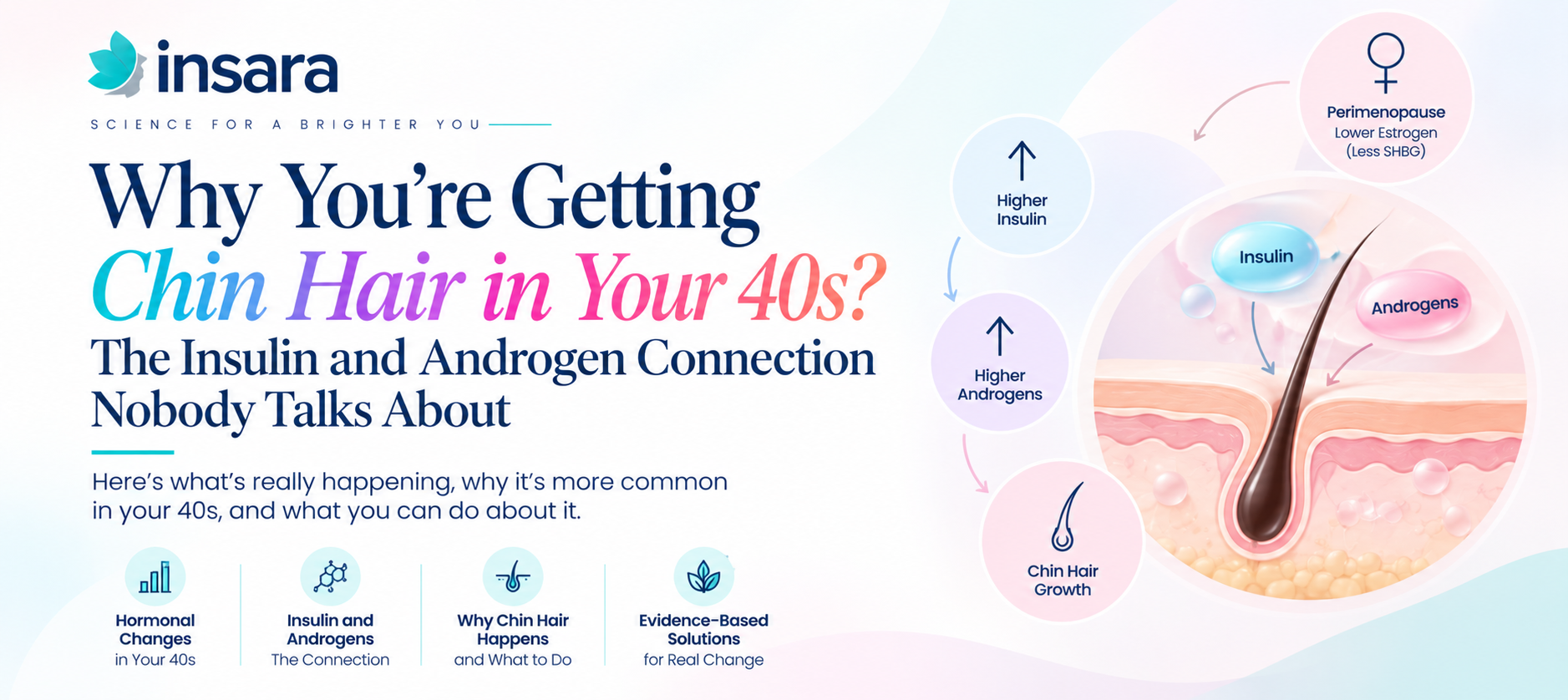
Insulin resistance is one of the most direct drivers of androgen excess in women. When insulin rises, androgens rise with it. And when androgens rise, hair follicles in areas typically associated with male-pattern hair growth respond by producing coarser, darker hair.
The Insulin-Androgen Pathway
The connection between insulin and androgens runs through a specific gene pathway that was historically discussed primarily in the context of PCOS/PMOS, but applies to any woman with elevated insulin.
When insulin is chronically high, it activates receptors in the ovaries and adrenal glands that upregulate androgen production. This pathway, when stimulated by insulin, increases the production of testosterone and androstenedione.
Once circulating androgen levels rise above a threshold, hair follicles in hormonally sensitive areas — the chin, jawline, upper lip, and sideburn areas — shift from producing fine vellus hair to coarser, darker terminal hair. This is the same mechanism behind hirsutism in PCOS/PMOS. The only difference in your 40s is what is driving the insulin elevation.
In PCOS/PMOS, the insulin elevation often begins in earlier years due to genetic predisposition. In women without PCOS/PMOS, the estrogen decline of perimenopause removes the insulin-sensitising protection that estrogen provided, and insulin rises for the first time meaningfully in the 40s.
Why Perimenopause Accelerates This
Estrogen suppresses androgen activity in two ways.
First, estrogen stimulates the liver to produce sex hormone-binding globulin (SHBG), a protein that binds to testosterone in the bloodstream and renders it biologically inactive. When SHBG is high, less free testosterone is available to act on hair follicles.
As estrogen declines during perimenopause, SHBG production falls. More free testosterone becomes available. Follicles that were previously protected by SHBG binding now receive an androgen signal they respond to with coarser hair growth.
Second, estrogen sensitizes cells to insulin. When estrogen declines, insulin resistance worsens, fasting insulin rises, and the androgen-stimulating effect of elevated insulin becomes more pronounced. Less estrogen means less insulin sensitivity, which means more insulin, which means more androgen, which means more facial hair.
This is why chin hair can appear or worsen significantly during perimenopause even in women who had completely clear skin and minimal facial hair throughout their reproductive years.
How to Address the Root Cause
The most direct approach is addressing what is driving the androgen elevation in the first place: insulin.
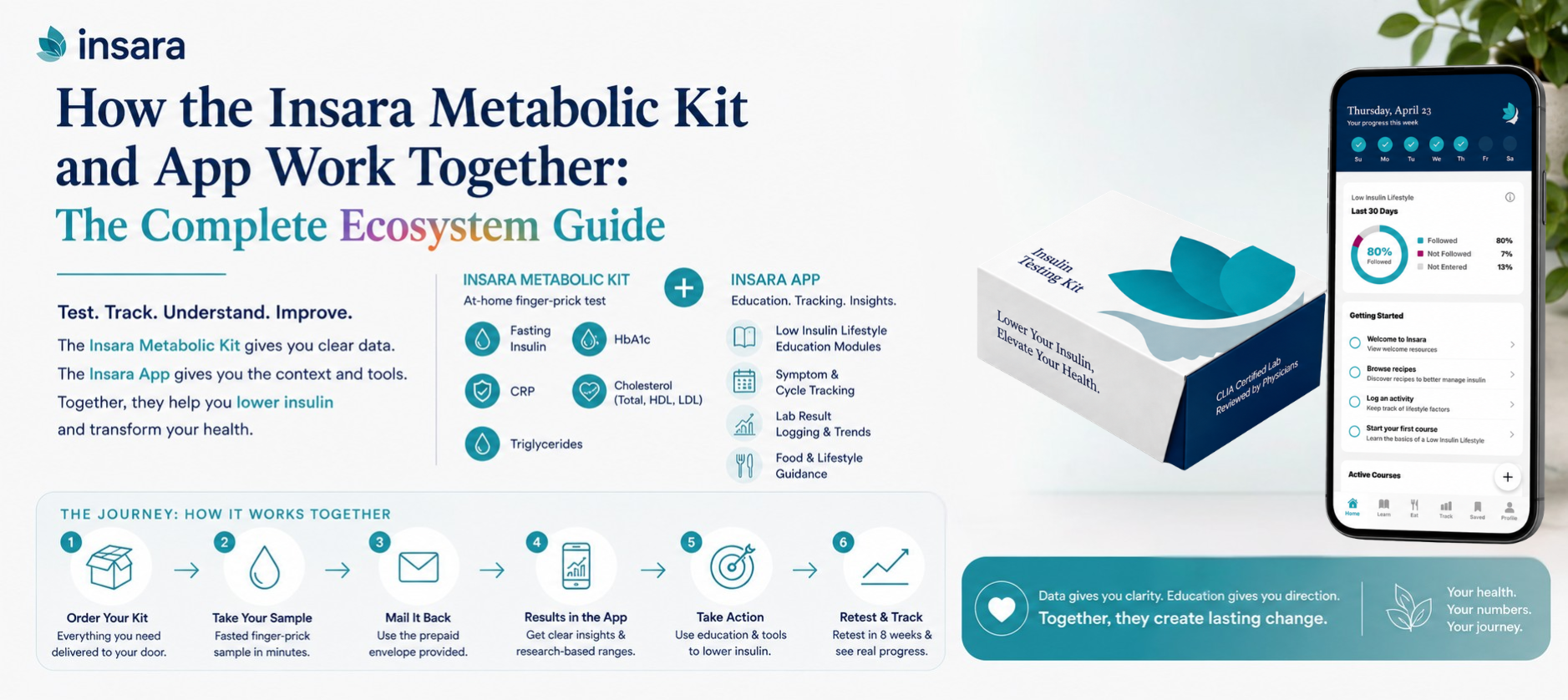
Measure your fasting insulin. This is the measurement that tells you whether elevated insulin is contributing to your androgen picture. A research-supported optimal range is below 8 mIU/mL. The Insara Metabolic Kit measures this from a home finger-prick sample with CLIA-certified results in 3 to 7 days.
Explore the Insara Metabolic Kit
Follow the Low Insulin Lifestyle. In the Insara clinical studies, fasting insulin dropped by 35 to 52% in eight weeks through dietary change alone. Alongside the insulin drop, free testosterone dropped by 23% in the same timeframe. That hormonal shift at the androgen level is what directly reduces the stimulus that is driving facial hair.
The Low Insulin Lifestyle does not involve calorie restriction. It focuses on identifying and reducing the foods that produce the largest insulin responses — primarily starches, sugars, non-fermented dairy, and certain protein sources like whey. The Insara App walks you through this in detail.
Discuss SHBG-supporting options with your provider. For women who are appropriate candidates, hormone replacement therapy can restore some of estrogen’s SHBG-stimulating and insulin-sensitising effects. This is an individual clinical conversation.
What About the Hair That Is Already There?
Lowering insulin and androgens stops the signal that is driving new hair growth and can slow the progression of existing coarse hair over time. It does not remove hair follicles that have already converted to terminal growth. For existing facial hair, removal methods — threading, laser, electrolysis — address the physical hair while the underlying hormonal correction addresses the root cause.
Addressing only the physical hair without addressing the insulin and androgen driver means the follicles continue receiving the signal to produce coarse hair, and management becomes an ongoing task rather than a resolving one.the right direction.oid fertility treatment. It’s to make sure an important metabolic factor isn’t being overlooked.
Frequently Asked Questions
The most likely explanation is the combination of estrogen decline removing SHBG protection and insulin sensitization, which allows both rising androgen activity and rising insulin to produce effects that were previously buffered. This is a hormonal and metabolic shift, not a cosmetic one.
Yes, hirsutism including chin and jawline hair is one of the most common androgenic symptoms of PCOS/PMOS. The mechanism is insulin driving androgen overproduction. Women without PCOS can experience the same phenomenon when insulin rises for other reasons, particularly during perimenopause.
Lowering insulin reduces the androgen stimulus that is driving the hair growth. The Insara clinical studies showed a 23% drop in free testosterone in eight weeks of following the Low Insulin Lifestyle. This hormonal shift reduces the signal to hair follicles. Existing terminal hair requires removal, but the progression and new growth can be significantly reduced.
Yes, indirectly. Chronic stress elevates cortisol. Elevated cortisol raises insulin. Elevated insulin drives androgen production. Stress management is therefore a genuine part of addressing the hormonal picture behind facial hair, though it works through the cortisol-insulin-androgen pathway rather than directly.
Testing free testosterone alongside fasting insulin gives you the most complete picture. Free testosterone reflects how much biologically active androgen your follicles are being exposed to. Fasting insulin tells you what is driving it. Discussing both with a provider gives you the context to make informed decisions.
Not necessarily — chin hair can be driven by elevated insulin during perimenopause without a PCOS diagnosis. However, if you have other symptoms alongside chin hair — irregular cycles, acne, scalp hair thinning, fatigue, or difficulty managing weight — this pattern is worth discussing with a healthcare provider who is familiar with PCOS and insulin resistance.