

Hormonal imbalance is one of the most commonly used phrases in women’s health, and one of the least specific.
It can mean high testosterone, low progesterone, changing estrogen, thyroid dysfunction, elevated cortisol, or dozens of other things.
But there is one hormone that is often completely left out of the hormonal conversation: insulin.
Insulin resistance is often treated as something separate. Something metabolic. Something related to diabetes rather than periods, acne, unwanted hair growth, or fertility.
But insulin is a hormone. And in women with PCOS/PMOS, elevated insulin can be an important upstream driver of the reproductive hormone disruption happening downstream.
That distinction matters because managing the hormones you can see on a lab report is not necessarily the same thing as addressing what is driving them.
Insulin Is A Master Hormone
When most women think about hormones, they think about estrogen, progesterone, and testosterone.
But insulin and cortisol are two of the body’s master hormones because changes in them can affect multiple other hormonal and metabolic systems.
Insulin is produced by the pancreas and is best known for controlling blood sugar. But its job goes far beyond glucose.
Insulin tells the body when to store energy and when stored fat can be released. It communicates with the ovaries, liver, muscle, fat tissue, kidneys, and brain. It influences ovarian androgen production and sex hormone binding globulin. It interacts with thyroid hormone metabolism and signaling. In the kidneys, insulin can increase sodium reabsorption and interact with the renin angiotensin aldosterone system, connecting insulin resistance with fluid balance and blood pressure. Insulin interacts with pathways involved in appetite, reward, mood, and cognition, including neurotransmitter systems such as dopamine and serotonin.
This is why insulin resistance is about so much more than blood sugar.
Cortisol is the other major piece of this picture. Cortisol helps your body respond to stress and mobilize energy when you need it. Changes in cortisol signaling can also affect glucose regulation, sleep, appetite, and metabolic health.
This is why insulin and cortisol are master hormones. They do not simply participate in one hormonal pathway. They help shape the metabolic environment in which many of your other hormones operate.
And for women with PCOS/PMOS, insulin is particularly important.
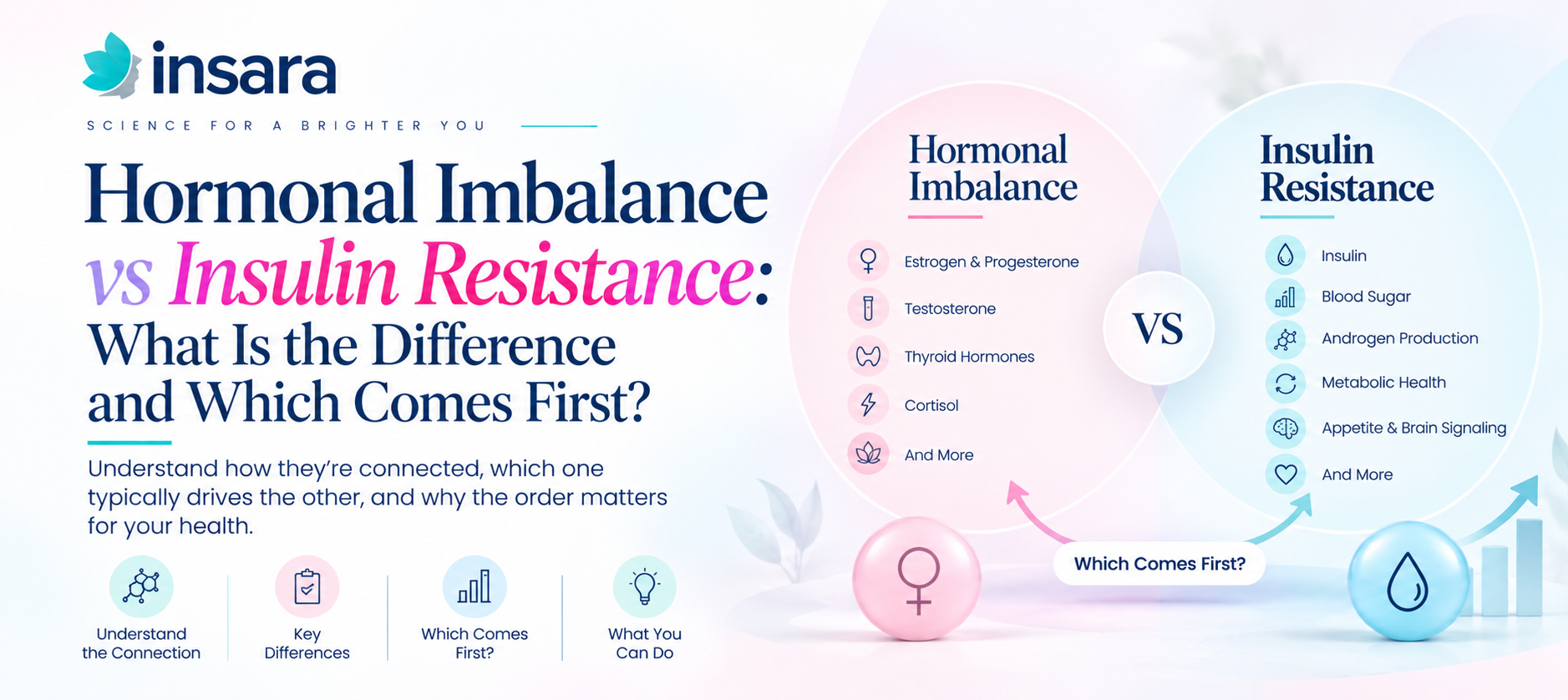
Which Comes First?
The most important question in the insulin versus hormonal imbalance discussion is: which one is driving the other?
For many women with PCOS/PMOS, insulin is upstream.
When insulin remains elevated, its effects reach far beyond blood sugar:4
Reproductive hormones: High insulin can increase ovarian androgen production, lower SHBG, and contribute to disrupted ovulation, irregular cycles, acne, unwanted hair growth, and infertility.
Thyroid hormones: Insulin resistance is closely connected with thyroid function and can interact with thyroid hormone metabolism and signaling, influencing how the body regulates energy and metabolism.
Leptin: Insulin stimulates leptin production, and insulin resistance commonly occurs alongside leptin resistance, disrupting the signals between stored body fat and the brain that regulate hunger and energy balance.
GLP 1: Insulin normally helps stimulate GLP 1 secretion. With chronic hyperinsulinemia and insulin resistance, this signaling can become impaired, contributing to an altered GLP 1 response after eating.
Cortisol: Insulin and cortisol work together to regulate when energy is stored and when it is made available. Disruption in either system can affect the other.
Aldosterone: Insulin influences sodium handling in the kidneys and interacts with the aldosterone system, connecting insulin resistance with fluid balance and blood pressure.
Insulin also acts in the brain, interacting with neurotransmitters including dopamine and serotonin, which influence appetite, reward, mood, and eating behavior.
This is why insulin is a master hormone. When insulin signaling is disrupted, the effects can ripple across reproductive hormones, thyroid hormones, appetite hormones, stress hormones, blood pressure hormones, and brain signaling.
What “Hormonal Imbalance” Often Actually Is
When a woman describes “hormonal imbalance” with irregular cycles, acne, unwanted facial hair, scalp hair thinning, difficulty conceiving, abdominal weight gain, energy changes, or intense cravings, the conversation shouldn’t stop with estrogen, progesterone, and testosterone.
I want to know what her insulin is doing.
For many women with PCOS/PMOS, elevated insulin may be sitting upstream of several of the hormonal abnormalities we are trying to treat downstream.
That does not mean insulin explains every hormonal symptom in every woman. Thyroid disease, adrenal disorders, pituitary disorders, menopause, and other reproductive conditions can occur independently of insulin resistance.
But insulin deserves to be part of the hormonal conversation.
And unfortunately, it often isn’t measured at all.
What to Do
Test your insulin.
Start with fasting insulin. A fasting insulin below 8 µIU/mL is a practical target based on published research.
But fasting insulin does not always tell the entire story, particularly in lean PCOS/PMOS.
Some women can have normal fasting insulin because their insulin has returned to baseline overnight but still produce an excessive insulin response after eating. In these cases, an oral glucose tolerance test with insulin measurements can provide additional information.
There is currently no universally standardized cutoff for 2 hour insulin, but published studies have identified thresholds in approximately the 40 to 50 µIU/mL range for identifying abnormal insulin responses or hyperinsulinemia. Therefore, below 50 µIU/mL at two hours is a practical target.
The Insara Metabolic Kit measures fasting insulin alongside other important metabolic markers from an at home finger prick sample.
Explore the Insara Metabolic Kit
Then address the upstream driver.
The Low Insulin Lifestyle was designed to lower insulin by reducing the foods that produce the largest insulin responses while prioritizing whole food protein, non-starchy vegetables and fruits, healthy fats, movement, sleep, and other habits that support metabolic health.
The goal is not simply to manage what is happening downstream.
It is to ask why it is happening in the first place.
Frequently Asked Questions
Yes. Insulin is a hormone. Insulin resistance means tissues are becoming less responsive to insulin’s signal, often causing the pancreas to compensate by producing more insulin. We tend to put insulin resistance into a separate “metabolic” category, but metabolism and hormones are not separate systems.
Yes. Thyroid disease, adrenal conditions, pituitary disorders, menopause, and primary reproductive hormone disorders can all cause hormonal changes independently of insulin resistance. Insulin is not responsible for every hormonal problem. But particularly in PCOS/PMOS, it is an important upstream hormone that deserves to be investigated.
Hormonal birth control can be very effective for managing symptoms. It can provide predictable bleeding, protect the uterine lining, increase SHBG, and improve acne and unwanted hair growth. But it does not lower insulin or reverse insulin resistance. If insulin is contributing to the underlying hormonal environment, that piece needs to be addressed separately.
For many women with PCOS/PMOS, improving insulin can improve the hormonal environment. In our clinical research, fasting insulin decreased by 35 to 52% while free testosterone decreased by approximately 23% over eight weeks without hormone specific treatment. Individual responses vary, but it demonstrates why looking upstream at insulin can be so important.
Test rather than guess. Fasting insulin can be evaluated alongside thyroid testing and other reproductive or metabolic labs appropriate for your symptoms. And if fasting insulin is normal but PCOS/PMOS symptoms strongly suggest hyperinsulinemia, an oral glucose tolerance test with insulin measurements can provide a more complete picture.
The goal should not simply be to tell women that their hormones are “imbalanced.”
The better question is: Why?