


“Metabolic health” has become one of the most-used phrases in wellness conversations in recent years. It is used to describe everything from blood sugar management to weight to energy levels. Used that broadly, it starts to mean almost nothing.
Here is what metabolic health actually means, how it is measured, why it matters specifically for women with PCOS/PMOS, and why the marker most central to it is the one most often left off your blood panel.
The Clinical Definition
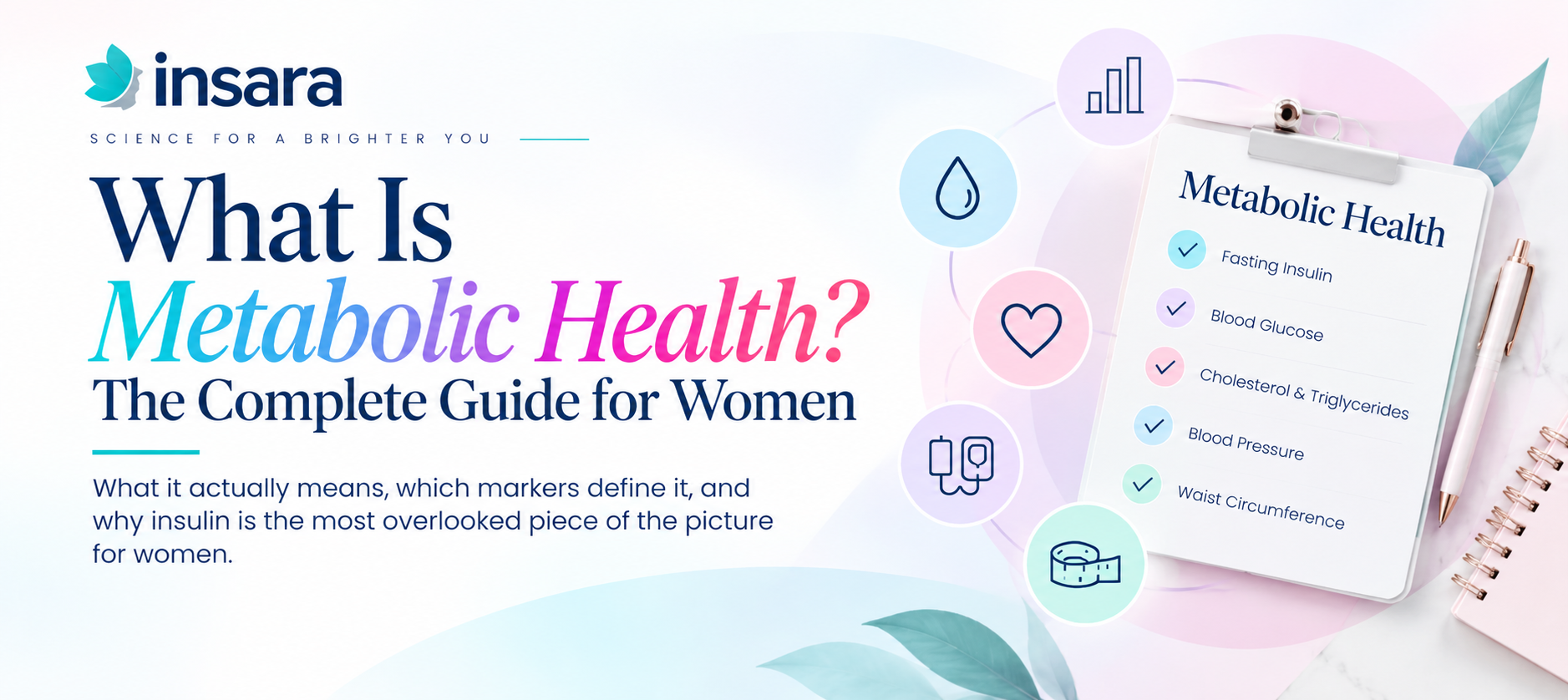
Metabolic health is more than a number on the scale. One widely used research definition looks at five major areas:
- Blood glucose
- Triglycerides
- HDL cholesterol
- Blood pressure
- Waist circumference
In a large analysis of U.S. adults, optimal metabolic health was defined as having all five within healthy ranges without medication. Only 12.2% of American adults met that definition.
But there is something important missing from that definition: insulin.
The Missing Marker: Insulin
The five-marker clinical definition of metabolic health does not include fasting insulin. This is a significant gap in standard screening, particularly for women with PCOS/PMOS.
Here is why it matters: in the early stages of insulin resistance, the pancreas compensates by producing more insulin to keep blood glucose normal. Fasting glucose looks fine. HbA1c looks fine. A person appears metabolically healthy on standard screening while their fasting insulin has been elevated for years and their metabolic health has been progressively deteriorating.
Fasting insulin is the most sensitive early marker of insulin resistance — the most common underlying metabolic dysfunction in PCOS/PMOS. Standard metabolic screening does not catch it.
This is especially relevant in PCOS/PMOS, where insulin resistance is a recognized part of the underlying biology and is why I believe insulin deserves a much bigger place in the metabolic health conversation.
What Good Metabolic Health Looks Like for Women With PCOS/PMOS
True metabolic health for a woman with PCOS/PMOS means the following are all in their evidence-based optimal ranges:
| Marker | Optimal Range |
|---|---|
| Fasting insulin | 3 to 8 mIU/mL |
| Fasting glucose | 70 to 99 mg/dL |
| HbA1c | Below 5.7% |
| Triglycerides | Below 150 mg/dL |
| HDL cholesterol | Above 50 mg/dL |
| High-sensitivity CRP | Below 1.0 mg/dL |
| Blood pressure | Below 120/80 mmHg |
I put insulin first intentionally.
It is the upstream driver. When it is optimal, the other markers tend to follow. When it is elevated, virtually every other marker on this list is affected.
Why Metabolic Health Changes Across a Woman’s Life
Insulin resistance is not static. It can change throughout a woman’s life in response to normal hormonal transitions. There are several periods when insulin resistance naturally increases, which can make an underlying metabolic problem more noticeable.
During puberty: Insulin resistance naturally increases during puberty, so the body produces more insulin to keep blood sugar normal. This is actually a normal and useful part of development. Insulin is a storage and growth hormone, and higher insulin helps the body store energy and gain the body fat needed to support reproductive development and prepare the body for the possibility of pregnancy. For most girls, this temporary insulin resistance improves as puberty ends.
But in girls who are genetically predisposed to PCOS/PMOS, that normal rise in insulin can also stimulate the ovaries to produce more androgens. This helps explain why symptoms like irregular periods, acne, unwanted hair growth, and weight changes often first appear around puberty.
During pregnancy: Insulin resistance naturally increases during pregnancy, causing the body to produce more insulin. Early in pregnancy, insulin helps the mother store energy, including building fat stores that can be used later to support fetal growth and breastfeeding. As pregnancy progresses, hormones produced by the placenta increase insulin resistance even further, helping keep more glucose and other nutrients available in the bloodstream for the growing baby.
This is a normal adaptation to pregnancy. But if a woman enters pregnancy already insulin resistant, her pancreas has to compensate on top of this normal pregnancy related increase. That can lead to even higher insulin levels and increases the risk of gestational diabetes, particularly in women with PCOS/PMOS.
After delivery, insulin levels should fall dramatically. This metabolic shift helps the body move from storing energy during pregnancy to mobilizing those fat stores to help provide the enormous amount of energy needed to produce breast milk.
During perimenopause: Insulin resistance can increase as estrogen becomes more erratic and eventually declines. The body compensates by producing more insulin, and higher insulin makes it harder to access stored body fat for energy because insulin suppresses fat burning. At the same time, declining estrogen and aging make it easier to lose muscle. This combination can shift body composition toward less muscle and more abdominal fat, even when the number on the scale does not change dramatically. Less muscle can then worsen insulin resistance because muscle is one of the body’s largest users of glucose, creating a cycle that can become increasingly difficult to break.
After menopause: Once estrogen remains consistently lower, insulin resistance and visceral fat tend to increase. This matters far beyond weight. Higher insulin and insulin resistance are associated with many of the chronic diseases that become more common after menopause, including cardiovascular disease, type 2 diabetes, fatty liver disease, and cognitive decline. Estrogen also has protective effects on blood vessels, cholesterol metabolism, inflammation, and the brain, so as estrogen declines, women lose some of that protection at the same time metabolic risk is increasing. This helps explain why conditions like heart disease and Alzheimer’s disease become increasingly important health concerns for women after menopause.
Metabolic health isn’t something women should start thinking about at menopause. The metabolic foundation we carry into menopause is being built throughout our entire lives.
That is why understanding and monitoring metabolic health matters at every stage of a woman’s life.
How to Improve Metabolic Health
1. Know Your Numbers
You cannot manage what you do not measure. Start by establishing a baseline.
At minimum, I want women to know their fasting insulin, glucose, HbA1c, triglycerides, HDL cholesterol, blood pressure, and waist circumference. High sensitivity CRP can provide additional information about inflammation.
The Insara Metabolic Kit measures fasting insulin, HbA1c, high sensitivity CRP, cholesterol, and triglycerides from a single at home finger prick sample.
Explore the Insara Metabolic Kit
2. Eat to Lower Insulin
This is the foundation of the Low Insulin Lifestyle.
Instead of simply eating less, the goal is to eat in a way that requires your body to secrete less insulin throughout the day. That means reducing the foods that produce the largest insulin response, particularly added sugars and concentrated starches, while building meals around whole food protein, non starchy vegetables and fruits, and healthy fats. And importantly, you do not need to eliminate carbohydrates or count calories to do it.
In our clinical research, women following the Low Insulin Lifestyle experienced significant improvements in fasting insulin, triglycerides, free testosterone, and weight within eight weeks.
3. Move Your Body
Exercise does not have to mean spending hours in the gym.
Muscle is an important site for glucose disposal, and regular movement can improve how your body responds to insulin. Walking, resistance training, Pilates, yoga, cycling, or anything else you genuinely enjoy can support metabolic health.
The best exercise is the one you will actually keep doing.
4. Protect Your Muscle
Muscle becomes increasingly important as women age, particularly during perimenopause and after menopause.
Maintaining muscle gives the body a larger place to use glucose and helps protect against the age-related decline in metabolic health. Prioritize adequate protein, regular movement, and some form of resistance exercise.
5. Prioritize Sleep
Sleep is metabolic health.
Chronically inadequate sleep is associated with greater insulin resistance and can make hunger, appetite, and food choices harder to regulate. Aim for consistent, adequate sleep rather than treating it as an afterthought.
6. Retest
Lifestyle changes should produce measurable changes.
Rather than relying only on the scale or how you feel, repeat your metabolic markers after making consistent changes. If fasting insulin, triglycerides, glucose, waist circumference, or other markers are improving, you have objective evidence that your metabolic health is moving in the right direction.oid fertility treatment. It’s to make sure an important metabolic factor isn’t being overlooked.
Frequently Asked Questions
There may be no obvious signs at all. When symptoms do occur, they can include abdominal weight gain, strong carbohydrate cravings, fatigue or energy crashes after meals, irregular cycles, skin tags, or darkening of the skin around the neck or other folds. Symptoms alone cannot diagnose insulin resistance, which is why testing matters.
Absolutely. Body size does not tell you how much insulin your pancreas is producing. This is especially important in lean PCOS/PMOS, where women can have little or no excess weight while still experiencing hyperinsulinemia. And fasting insulin does not always tell the whole story. Some women, particularly those with lean PCOS/PMOS, can have a normal fasting insulin but produce excessive insulin after a glucose challenge. In these cases, an oral glucose tolerance test with insulin measurements can reveal hyperinsulinemia that fasting testing misses. There is currently no universally standardized 2 hour insulin cutoff, but published studies have identified values around 41 to 50 µIU/mL as useful thresholds for identifying insulin resistance or hyperinsulinemia. At Insara, we use a 2 hour insulin below 50 µIU/mL as a practical target.
Yes. Puberty, pregnancy, perimenopause, and menopause all change metabolic demands, but lifestyle still matters at every stage. You are never “too old” to improve metabolic health.
Don’t rely on weight alone. Look at the bigger picture: insulin, glucose, HbA1c, triglycerides, HDL cholesterol, blood pressure, waist circumference, and other relevant markers. More importantly, follow how those numbers change over time.
Because your pancreas can compensate for insulin resistance by producing more insulin. That extra insulin can keep glucose within the normal range, sometimes long before glucose based markers become abnormal. This is one reason why insulin deserves a place in preventative metabolic health screening.
Insulin deserves particular attention because insulin resistance is an important part of PCOS/PMOS biology and elevated insulin can stimulate ovarian androgen production. Yet insulin is rarely included in routine metabolic screening. Looking at insulin alongside glucose and the rest of the metabolic picture can provide information that glucose alone cannot.