

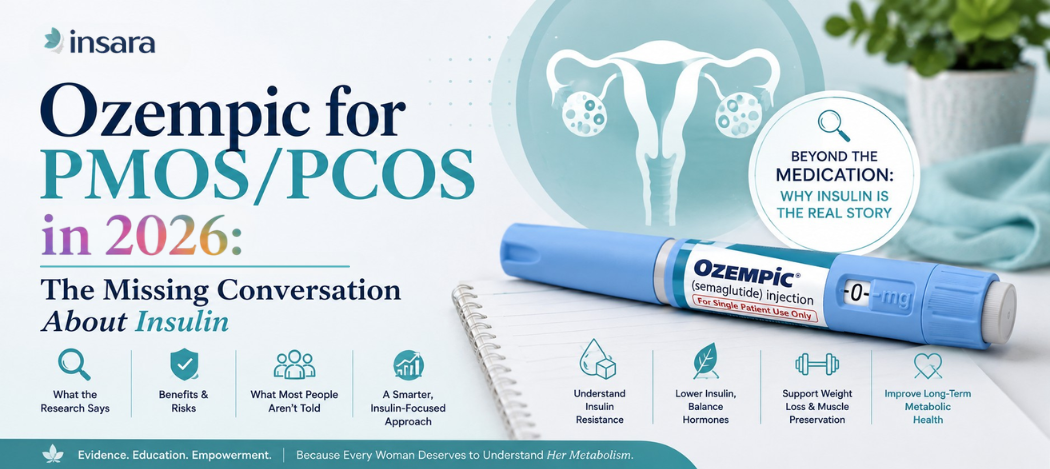
Ozempic has become one of the most talked about medications in medicine. Every week I hear from women with PMOS/PCOS asking the same question:
“Should I take Ozempic?”
The answer isn’t as simple as yes or no.
I don’t think Ozempic is a bad medication.
In fact, I think it has transformed the treatment of obesity and type 2 diabetes.
But I also think there’s an important conversation missing, especially for women with PMOS/PCOS.
That conversation is about insulin.
Why Ozempic Was Originally Developed
Ozempic (semaglutide) belongs to a class of medications called GLP-1 receptor agonists.
These medications were originally designed to help people with type 2 diabetes, a condition where, over time, the pancreas begins to lose its ability to produce enough insulin to keep blood sugar under control.
GLP-1 medications help in two important ways.
- First, they stimulate the pancreas to release more insulin when blood sugar rises after a meal.
- Second, they reduce appetite by acting on the brain, helping people feel full sooner and eat less.
For someone with type 2 diabetes, these mechanisms make perfect sense.
If your pancreas isn’t making enough insulin, helping it produce more insulin can lower blood sugar.
Why PMOS/PCOS Is Different
PMOS/PCOS is fundamentally different.
The problem isn’t that the pancreas makes too little insulin.
The problem is that, for many women, it makes too much.
Years before blood sugar or A1c become abnormal, many women with PMOS/PCOS are already producing excessive amounts of insulin.
That excess insulin stimulates the ovaries to produce more testosterone, disrupts ovulation, contributes to acne, unwanted hair growth, and weight gain, and increases the risk of developing type 2 diabetes later in life.
This is why I believe it’s important to think about GLP-1 medications differently in PMOS/PCOS than we do in type 2 diabetes.
So Why Do GLP 1 Medications Help?
This is where things get interesting.
I don’t believe the greatest benefit of GLP 1 medications in PMOS/PCOS is necessarily that they stimulate insulin secretion.
I believe it’s that they help people eat less.
When appetite decreases, calorie intake usually decreases.
As body weight falls, insulin levels often fall as well.
Lower insulin means less stimulation of the ovaries, lower androgen production, and improvements in many PMOS/PCOS symptoms.
In other words, many of the benefits we see in the research may be a consequence of lowering insulin through weight loss, rather than simply the medication itself.
That’s an important distinction.
Food Quality Still Matters
One misconception I worry about is that once someone starts a GLP 1 medication, food quality no longer matters.
I don’t think that’s true.
GLP-1 medications reduce appetite, but they don’t change the way different foods affect your metabolism.
A diet built around foods that repeatedly produce large insulin responses will not support the same metabolic improvements as a diet designed to keep insulin levels lower.
That’s why I believe a Low Insulin Lifestyle remains important, even if you choose to take a GLP-1 medication.
Medication and lifestyle should not compete. They should work together.
Protecting Muscle During Weight Loss
Whenever someone loses weight, preserving muscle should be one of the highest priorities.
Muscle is one of the body’s most metabolically active tissues and plays an important role in maintaining insulin sensitivity, strength, and long-term metabolic health.
Eating adequate protein, performing resistance exercise, and choosing foods that support a healthier insulin response can all help preserve lean body mass during weight loss. That’s because when insulin is high, the body is less able to burn fat for energy.
The goal isn’t simply to weigh less.
The goal is to improve body composition while protecting your metabolism.
What Happens If You Stop Ozempic?
Many women eventually stop GLP 1 medications.
This is another conversation that doesn’t happen often enough.
- Sometimes because of cost.
- Sometimes because of lack of weight loss.
- Sometimes because of side effects.
And many women with PMOS/PCOS stop because they’re planning a pregnancy.
Without sustainable lifestyle habits, weight regain after discontinuation is common.That’s why lifestyle should never be viewed as the alternative to medication. It should be the foundation.
If you’ve built habits that naturally keep insulin lower, you’re much more likely to maintain your progress if the medication is eventually discontinued.
What We Still Don’t Know
GLP 1 medications have changed the treatment of obesity. But they’re also relatively new. Many women with PMOS/PCOS begin these medications in their twenties or thirties and may remain on them for many years.
Because of that, I believe we need more long-term research in women with PMOS/PCOS who already have chronic hyperinsulinemia.
We know these medications are effective. We know they can improve weight and metabolic health. What we don’t yet know is what decades of treatment look like in this unique population.
Long-term effects on pancreatic health deserve continued study.
My Bottom Line
For some women, Ozempic may be absolutely the right decision. But whether you choose medication, lifestyle, or both, my recommendation is the same:
Don’t let the medication replace healthy habits.
Use it as an opportunity to build them.
A Low Insulin Lifestyle can help support weight loss, preserve metabolic health, and provide a sustainable roadmap for maintaining your results if the medication is ever discontinued.
Because the goal isn’t simply to lose weight.
The goal is to create an environment where your body naturally requires less insulin.
Frequently Asked Questions
No. Ozempic (semaglutide) is FDA approved for the treatment of type 2 diabetes, and Wegovy is approved for chronic weight management. Neither medication is FDA approved specifically for PMOS/PCOS, so prescribing either medication for PMOS/PCOS is considered off label.
It can. Studies show that semaglutide can improve weight loss, insulin resistance, and menstrual regularity, particularly in women with overweight or obesity. Much of this benefit appears to be related to weight loss, which lowers insulin levels and improves hormone balance.
Generally, yes. Most women experience lower insulin levels over time because they eat less, lose weight, and improve insulin sensitivity. However, GLP-1 medications also stimulate insulin secretion after meals, which is why food quality still matters. Choosing foods that produce smaller insulin responses may help optimize metabolic health while taking these medications.
They stimulate insulin secretion after meals, but they also reduce appetite. For many women with PMOS/PCOS, the reduction in appetite leads to lower calorie intake, weight loss, and ultimately lower insulin levels over time. That reduction in chronic insulin exposure is likely responsible for many of the hormonal improvements seen in research.
Absolutely. In fact, they complement each other. A Low Insulin Lifestyle helps reduce the insulin demand created by food, while Ozempic helps reduce appetite. Together, they may support better metabolic health than either approach alone.
Yes. Ozempic reduces appetite, but it doesn’t change how different foods affect insulin. Prioritizing foods that produce a lower insulin response, eating adequate protein, and performing resistance exercise may help preserve muscle mass while supporting healthier fat loss.
Possibly, but the evidence is much more limited. Most clinical trials have focused on women with overweight or obesity, where weight loss is a major driver of improvement. Women with lean PMOS/PCOS should discuss the potential benefits and risks with their healthcare provider because the risk benefit profile may be different.
Many people regain some or all of the weight they lost if lifestyle habits haven’t changed. That’s why building sustainable nutrition and exercise habits while taking the medication is so important. Lifestyle provides a roadmap for maintaining metabolic improvements long after the medication is discontinued.
Women planning pregnancy should discuss the timing of discontinuation with their healthcare provider. Current prescribing information recommends stopping semaglutide before conception. Developing healthy eating habits before discontinuing the medication may help reduce the risk of rebound weight gain during this transition.
They’re different tools that work in different ways. Ozempic is a medication that reduces appetite and stimulates insulin secretion in response to meals. A Low Insulin Lifestyle focuses on reducing the need for insulin in the first place by choosing foods that produce smaller insulin responses. For many women, the most effective approach may be combining medication, when appropriate, with sustainable lifestyle changes.
No. GLP 1 medications can be an excellent option for some women, particularly those with obesity or significant metabolic disease. Others may achieve excellent results through lifestyle alone. The best approach depends on your symptoms, metabolic health, treatment goals, and discussion with your healthcare provider.
This article is for educational purposes only. It does not constitute medical advice, diagnosis, or treatment. Always consult a qualified healthcare provider before starting, stopping, or adjusting any medication.