

One of the most consistent surprises for women with PCOS/PMOS who start learning about insulin is this: whey protein powder can spike insulin more than many carbohydrate-containing foods.
This may sound counterintuitive. We have been told that only carbs raise blood sugar and therefore insulin. We’ve been told that protein powders are a healthy choice for weight management and muscle building.
The reality is more nuanced, and for women with PCOS who are trying to lower their insulin, understanding how different protein sources affect insulin is essential.
First, the Important Distinction: Insulin vs Blood Sugar
Before getting into protein powders specifically, the most important concept to understand is that insulin and blood sugar are not the same thing.
Blood glucose rises when you eat carbohydrates. Insulin rises in response to blood glucose. This is the mechanism most people understand.
But insulin is also stimulated directly by certain amino acids, independent of blood glucose. Leucine, isoleucine, and valine, the branched-chain amino acids, are the most potent direct insulin secretagogues among amino acids. Lysine and arginine also have measurable insulin-stimulating effects.
This means foods with no carbohydrates can still trigger a significant insulin response if they contain the right amino acid profile. And this is exactly what makes whey protein one of the most insulin-spiking foods available.
Why Whey Protein Specifically Spikes Insulin
Whey protein is a waste product of cheese and Greek yogurt production. It is a fast-digesting protein that is extremely high in branched-chain amino acids, particularly leucine. This is why whey is so popular for muscle building: leucine is the primary trigger for muscle protein synthesis.
It is also why whey produces one of the most significant insulin responses of any food tested.
Research measuring the insulin index of foods (a scale that ranks foods by the insulin response they produce per calorie) has found that whey protein produces an insulin response greater than white bread.1-3
This is the confusing part: your glucose monitor or HbA1c test will not show anything after a whey protein shake because blood sugar does not rise. But your insulin levels, measured over time, reflects the cumulative effect of every significant insulin stimulus, including whey.
For a woman with PCOS who is already genetically predisposed to oversecrete insulin in response to stimuli, adding whey protein shakes, cookies, pancakes, bars, muffins, etc is directly counterproductive to lowering insulin.
What About Other Protein Powders?
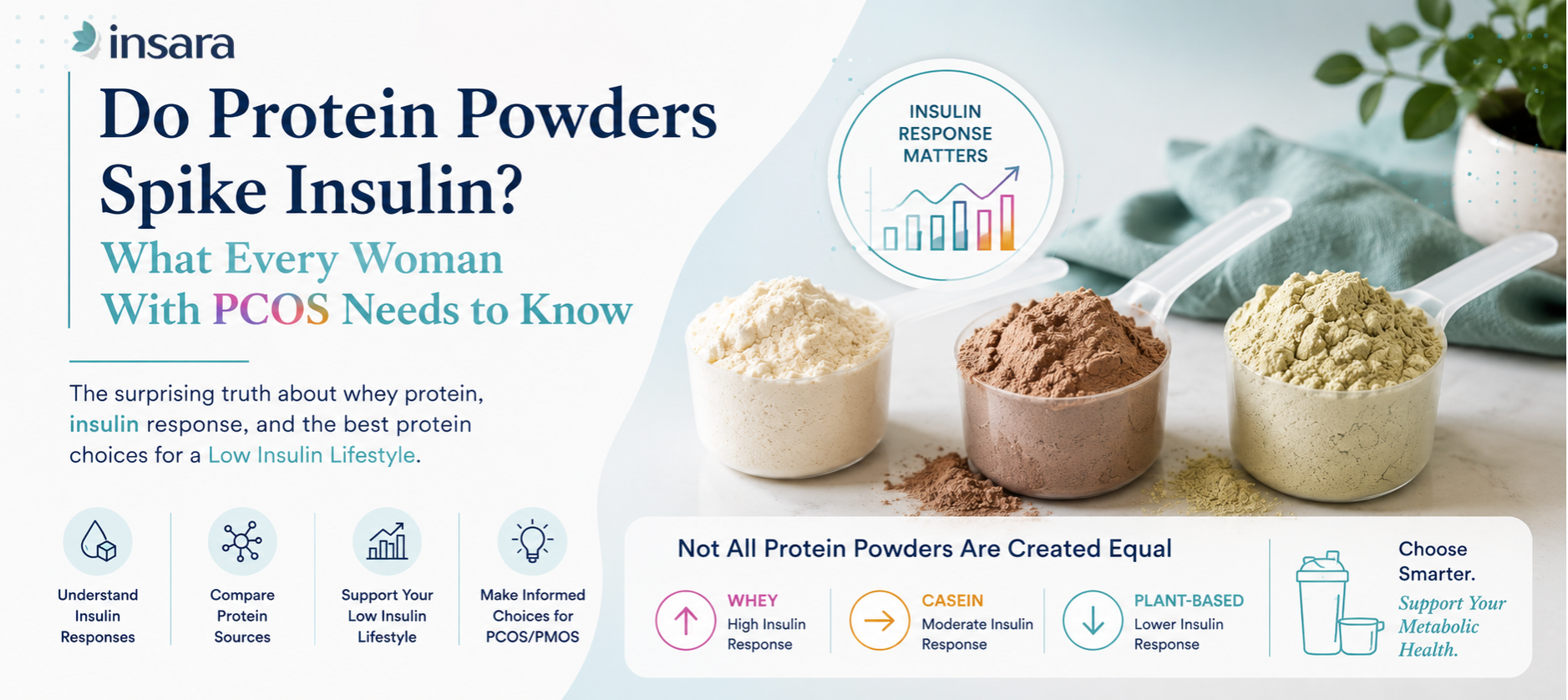
Not all protein powders behave like whey. The insulin response varies significantly by source:
Whey Protein Isolate and Concentrate
Whey is a waste product of cheese production. For many years, it created a major disposal challenge for the dairy industry because the liquid whey left behind after making cheese couldn’t simply be discarded. Advances in food processing eventually allowed manufacturers to filter, concentrate, and dry whey into protein powders that are now added to thousands of processed foods. Because whey is rapidly absorbed and naturally rich in branched-chain amino acids, particularly leucine, it produces one of the highest insulin responses of any protein source. Whey isolate is processed even further than whey concentrate to remove most of the fat and lactose, making it digest even more rapidly and often producing an even sharper insulin spike.
Casein Protein
Casein is the other major protein naturally found in milk. Unlike whey, it forms a gel in the stomach, slowing digestion and resulting in a more gradual insulin response. While casein produces less of an insulin spike than whey, it is also associated with increased insulin-like growth factor 1 (IGF 1), which may exacerbate PMOS/PCOS symptoms in some women.
Rice Protein
Brown rice protein is produced by removing most of the starch from brown rice and concentrating the remaining protein. Although it is highly processed, removing the starch results in a much lower insulin response than eating whole rice. Its insulin response is generally lower than whey but may be slightly higher than other plant-based protein powders.
Pea Protein
Pea protein is made by removing the starch and fiber from yellow peas to create a concentrated protein powder. Although it is a processed food, it consistently produces a much lower insulin response than whey protein, making it one of the better plant-based options for supporting a Low Insulin Lifestyle.
Hemp Protein
Hemp protein is produced by grinding defatted hemp seeds into a protein rich powder. Unlike many protein isolates, it retains some of its naturally occurring fiber and healthy fats, which slow digestion and help blunt the insulin response. While lower in protein per serving than many isolates, it remains one of the best plant based options for supporting metabolic health.
Egg White Protein
Egg white protein is made by separating the egg white from the yolk, pasteurizing it, and gently drying it into a powder. Unlike many protein powders, no chemical extraction or extensive processing is needed to concentrate the protein. Because it is simply powdered egg whites, it retains a naturally balanced amino acid profile while producing a lower insulin response
Beef Protein Isolate
Beef protein isolate is made by hydrolyzing beef protein into a concentrated protein powder with a balanced amino acid profile. It generally produces a moderate insulin spike, making it a good option for those looking to increase protein intake while supporting a Low Insulin Lifestyle. Choose products with minimal ingredients and no added sugars or starches.
Collagen Protein
Collagen protein is produced by hydrolyzing collagen from animal connective tissues into small peptides that dissolve easily in liquids. Because collagen is naturally low in branched chain amino acids, it produces a very low insulin response. It can be an excellent addition to your diet for supporting skin, joints, connective tissue, and gut health while keeping insulin levels low.
Bone Broth Protein
Bone broth protein is made by slowly simmering bones and connective tissue to release collagen and other naturally occurring proteins. The liquid is then concentrated and dried into a powder. Because it is rich in collagen and naturally low in branched chain amino acids, bone broth protein produces a very low insulin response while providing nutrients that support healthy skin, joints, connective tissue, and gut health.
Insulin Response Comparison by Protein Source
| Protein Source | Insulin Response* | Notes |
|---|---|---|
| Whey isolate | Very High | Fast digesting but produces one of the highest insulin responses. |
| Whey concentrate | Very High | Slightly slower digestion but still highly insulin stimulating. |
| Casein | High | Associated with increased IGF-1, which may worsen PMOS/PCOS symptoms. |
| Brown rice protein | Moderate | Not generally recommended, but removing the starch leaves a protein with a relatively moderate insulin response. |
| Pea protein | Moderate | Highly processed to remove the starch, leaving a protein with a relatively moderate insulin response. |
| Egg white | Moderate-Low | Minimally processed, simply powdered egg whites. Whole eggs are an even better option. |
| Beef Protein Isolate | Moderate-Low | Made from hydrolyzed beef protein with a balanced amino acid profile. |
| Hemp protein | Low | One of the best plant-based protein options thanks to its healthy fats, fiber, and lower insulin response. |
| Collagen peptides | Very Low | Very low insulin response due to its low branched chain amino acid (BCAA) content. Great for supporting skin, joints, and connective tissue. |
| Bone Broth Protein | Very Low | Very low insulin response with additional collagen to support skin, joints, gut, and connective tissue. |
*Insulin response data varies across studies and conditions. This table reflects general trends based on available research. Individual responses vary.
What This Means for Your PCOS Management
If you currently use whey protein regularly, here is how to think about this practically:
A morning whey shake is likely one of the larger insulin spikes in your day. For someone following the Low Insulin Lifestyle and working to reduce fasting insulin, a daily whey shake is working against that goal regardless of how clean the rest of the diet is.
Choosing a lower insulin protein source such as egg white protein, hemp protein, collagen protein, bone broth protein, or beef protein isolate can help you meet your protein needs while producing a much smaller insulin response.
Whole food protein sources are preferable to powders. Eggs, chicken, fish, Greek yogurt (in moderation), and non-starchy plant-based proteins all provide protein with a lower and more gradual insulin response than most concentrated protein powders. The matrix of the whole food, including fat, fibre, and the slower digestion rate, blunts the insulin response in ways that isolated powders cannot replicate.
If you use protein powder post-workout, timing matters. Post-exercise insulin sensitivity is higher, meaning the same protein produces a more efficient and metabolically appropriate insulin response when consumed in the window after resistance training.
The Best Protein Sources for PCOS
Rather than relying on protein powders, these whole food protein sources support the Low Insulin Lifestyle:
- Eggs — complete protein, fat blunts insulin response, highly satiating
- Chicken and turkey — lean, complete proteins with low insulin index
- Fish and seafood — excellent for omega-3s alongside protein
- Grass-fed beef — richer in omega-3s than grain-fed; moderate insulin response
- Greek yogurt (full-fat, plain) — fermentation reduces insulin response vs regular dairy; high protein
- Lupini beans — naturally rich in protein and fiber and very low in starch, making them one of the most insulin-friendly legumes available.
- Edamame beans – unprocessed soybeans are another non-starchy bean that’s naturally high in protein and fiber, making it a great choice for supporting a Low Insulin Lifestyle.
- Tofu and tempeh — minimally processed plant-based complete proteins with low insulin response
What If I Need a Protein Powder?
Whole food protein sources should always be your first choice. Foods like eggs, fish, meat, poultry, lupini beans, and edamame provide protein within a natural food matrix that includes healthy fats, fiber, vitamins, and minerals.
That said, protein powders can be a convenient option when you’re short on time or need a portable meal or snack. If you choose to use one, opt for a protein source that supports a Low Insulin Lifestyle.
Choose lower insulin protein sources. Egg white, hemp, bone broth, collagen, and beef protein isolate are all better choices than whey for supporting a Low Insulin Lifestyle.
Keep the ingredient list simple. Choose protein powders with minimal ingredients and avoid added sugars, starches, gums, and unnecessary fillers whenever possible.
Watch for hidden whey. Many “plant based” or blended protein powders still contain whey protein. Always read the ingredient list to make sure you’re getting the protein source you expect.
More isn’t always better. Larger servings stimulate more insulin than smaller servings, regardless of the protein source. For most people, 20 to 30 grams of protein per serving is plenty to support satiety and muscle health.
Learn more about the Low Insulin Lifestyle food framework
The Bigger Picture
Protein powders are a convenience product, not a food category with universal properties. How much a protein powder affects your insulin depends on:
- The protein source
- The absorption rate
- What else is in the shake (added sugars, fruit, milk)
- When you consume it (fasted vs post-exercise)
- Your individual insulin secretion pattern (which, for women with PCOS, is already elevated)
The takeaway is not “never use protein powder.” It is: choose your protein source deliberately, understand that whey behaves more like a glucose load than plain meat or eggs in terms of insulin response, and prioritize whole-food proteins wherever possible.
If you want to understand your specific fasting insulin level and see how dietary changes affect it over time, the Insara Metabolic Kit gives you that baseline, and the Insara App helps you build the food framework around it.
Explore the Insara Metabolic Kit
Frequently Asked Questions
Yes. Whey protein produces one of the highest insulin responses of any commonly consumed food. It’s rapidly absorbed and naturally rich in branched chain amino acids, particularly leucine, which stimulate the pancreas to release insulin even without a significant rise in blood glucose.
It depends on the protein source. Whey protein consistently produces a much larger insulin response than most other protein powders. If your goal is to lower insulin, choosing a lower insulin protein source can help reduce your overall insulin exposure throughout the day.
If you choose to use a protein powder, lower insulin options such as egg white protein, hemp protein, bone broth protein, collagen protein, and beef protein isolate are generally better choices than whey. Whole food protein sources should still be your first choice whenever possible.
No. Protein powders differ dramatically in how they’re made, how quickly they’re digested, and how much insulin they stimulate. Choosing the right protein powder can make a meaningful difference if you’re following a Low Insulin Lifestyle.
Yes. Certain amino acids stimulate insulin secretion directly. This is why foods like whey protein can produce a large insulin response despite having very little carbohydrate and causing only a small rise in blood glucose.
Yes. Full-fat Greek yogurt produces a lower insulin response than whey protein powder. Fermentation, the removal of whey, and the presence of fat help lower the insulin response, making it a better option for women with PMOS/PCOS.
The Glycemic Index measures how much a food raises blood glucose. The Insulin Index measures how much insulin the body releases after eating a food. These are not always the same. Whey protein is a perfect example. It has very little effect on blood glucose but produces one of the highest insulin responses measured.
Protein should be included with every meal because it supports muscle health, helps keep you full, and can reduce the glucose response to a meal. However, not all proteins are equally insulin friendly. Prioritize whole food protein sources whenever possible, and if you use a protein powder, choose one with a lower insulin response.
References:
- Nilsson M, Stenberg M, Frid A. Glycemia and insulinemia in healthy subjects after lactose-equivalent meals of milk and other food proteins: the role of plasma amino acids and incretins. The American Journal of Clinical Nutrition, 80, 1246-1253 https://ajcn.nutrition.org/article/S0002-9165(22)03683-8/fulltext
- Salehi A, Gunnerud U, Muhammed SJ, Ostman E, Holst JJ, Björck I, Rorsman P. The insulinogenic effect of whey protein is partially mediated by a direct effect of amino acids and GIP on β-cells. Nutr Metab (Lond). 2012 May 30;9(1):48. https://pmc.ncbi.nlm.nih.gov/articles/PMC3471010/
- Kolic, J., Assaf, N. & Johnson, J.D. Nutrient and non-nutrient regulators of insulin secretion. Nat Rev Endocrinol (2026). https://doi.org/10.1038/s41574-026-01281-6. https://www.nature.com/articles/s41574-026-01281-6